
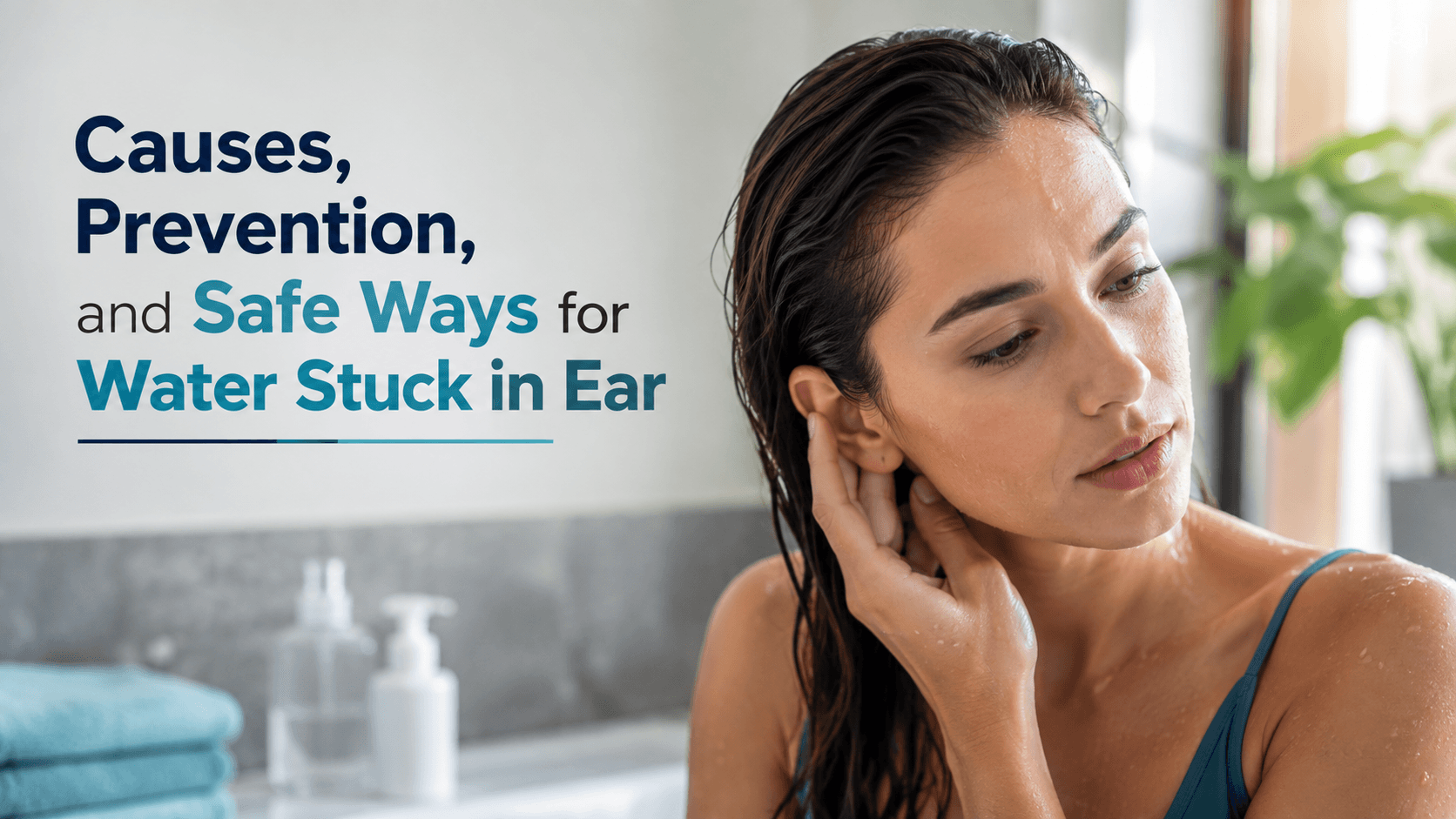
A sensation of trapped water inside the ear is a common experience after swimming, showering, or participating in water-based activities. While the feeling usually disappears on its own, prolonged moisture can create discomfort and, in some cases, increase the likelihood of irritation or infection. Understanding why water becomes trapped and knowing the safest ways to manage the condition can help protect your hearing and overall ear health. Instead of relying on unsafe home remedies, it is important to recognize when professional assessment is appropriate. If you have experienced water stuck in ear, learning about its causes and proper care can help prevent unnecessary complications.
Why Water Stuck in Ear Happens
The ear canal is designed to allow moisture to drain naturally. However, certain factors may prevent water from escaping efficiently, leaving a feeling of fullness or blockage.
Some common reasons include:
- Narrow or curved ear canals
- Excess ear wax that traps moisture
- Frequent swimming or water sports
- Use of earplugs that retain moisture
- Skin conditions affecting the ear canal
In most situations, trapped water drains naturally within a short period. Persistent symptoms, however, may indicate that further evaluation is needed.
Recognizing When Ear Infection Treatment May Be Needed
Moisture that remains in the ear canal for an extended time can create conditions that encourage bacterial growth. Although not every case leads to infection, recognizing warning signs early is important when considering ear infection treatment.
The table below highlights symptoms that may require attention:
| Symptom | What It May Indicate |
| Persistent ear pain | Possible inflammation or infection |
| Itching inside the ear | Irritation caused by trapped moisture |
| Swelling of the ear canal | Developing infection or inflammation |
| Fluid discharge | Possible bacterial involvement |
| Reduced hearing | Swelling or blockage affecting sound transmission |
Early assessment helps determine whether symptoms are caused by retained moisture, wax buildup, or another ear condition requiring appropriate management.
Safe Ways to Help Moisture Leave the Ear
Most cases improve without medical intervention. Gentle techniques may encourage natural drainage while reducing the risk of injury.
Consider the following approaches:
- Tilt your head toward the affected side.
- Gently pull the outer ear to straighten the ear canal.
- Allow gravity to assist drainage.
- Dry the outer ear carefully with a clean towel.
- Avoid inserting objects into the ear canal.
Using cotton swabs, hairpins, or similar objects may push wax deeper or damage the delicate lining of the ear canal, making the situation worse.
Understanding Options for Blocked Ear Treatment
A blocked sensation does not always result from trapped water alone. In some cases, ear wax, swelling, or inflammation contributes to the feeling of fullness. Appropriate blocked ear treatment depends on identifying the underlying cause rather than attempting repeated home remedies.
Professional evaluation may involve:
- Examination of the ear canal
- Assessment of ear wax accumulation
- Identification of inflammation or infection
- Recommendations based on individual findings
- Guidance on preventing future blockages
Understanding the cause of the blockage allows appropriate care while avoiding unnecessary discomfort or complications.
Preventing Future Ear Problems After Water Exposure
Simple preventive habits can reduce the likelihood of trapped moisture and support healthy ears after swimming or bathing.
Helpful preventive measures include:
- Dry ears gently after water activities.
- Avoid inserting objects into the ear canal.
- Use properly fitting swimming protection if recommended.
- Manage recurring wax buildup through professional assessment.
- Seek medical advice if symptoms persist beyond a few days.
Preventive care is often the most effective way to reduce recurring discomfort while maintaining healthy hearing.
Frequently Asked Questions
1. How long does trapped water usually remain in the ear?
In many cases, water drains naturally within several hours, although some situations may take up to a day.
2. Can trapped water affect hearing?
Yes. Temporary blockage caused by moisture may reduce hearing until the water drains or the underlying cause is addressed.
3. Is it safe to use cotton swabs to remove trapped water?
No. Cotton swabs can push ear wax deeper into the canal and may increase the risk of injury or irritation.
4. When should I seek professional care?
Persistent pain, swelling, discharge, significant hearing changes, or symptoms lasting more than a couple of days should be evaluated by a healthcare professional.
5. Can ear wax make trapped water worse?
Yes. Excess ear wax may prevent water from draining properly, increasing the sensation of blockage.
Conclusion
Although trapped moisture often resolves naturally, persistent symptoms should never be ignored. Understanding the causes, practicing safe ear care, and avoiding harmful cleaning methods all contribute to maintaining healthy hearing. When ongoing discomfort or inflammation develops, professional evaluation helps identify the most appropriate swimmer’s ear treatments based on the underlying condition. Total Ear Hygiene emphasizes safe, evidence-based ear care that supports long-term ear health through accurate assessment, preventive guidance, and appropriate management of common ear concerns.



No comment